


The Itria Valley in 7 Days: An Itinerary of Villages, Sea and Countryside
A week in the Itria Valley flies by: there is so much to see, try and taste. Living here, we always tell our guests the same thing: seven days are enough to get to know the main towns, go for a few swims, lose yourself in a market and head home already wanting to come back. They are not enough to see everything, and that is fine.
This itinerary grew out of the advice we give every week to the guests staying in our trulli. Each day pairs a town with a different experience (the sea, history, the countryside, food) and keeps the driving short: between the main stops it is almost always less than forty minutes by car, while the optional day trips to Bari and Lecce take an hour or more. The order of the days is only a suggestion: rearrange it around the weather and how much you feel like the beach.
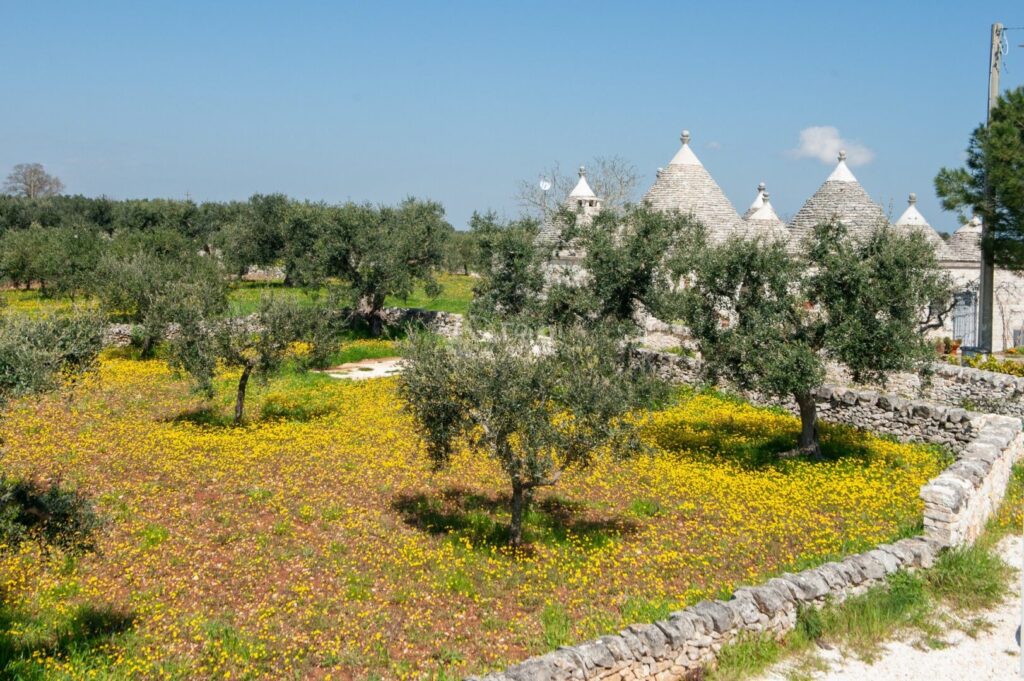
Before you go: how to use this itinerary
A car is almost essential. The towns are linked by the Ferrovie del Sud Est railway and the coast by the Trenitalia Bari-Lecce line, but timetables are designed for commuters, not holidaymakers, and masserie, beaches and the cycle path can only be reached by road. Almost all the old towns are pedestrianised or limited-traffic zones: park outside the walls and walk.
Check the market calendar first. The weekly markets are held on fixed days (you will find them under day 4): it is worth arranging your days around the weekday you arrive, even before you leave home.
The ideal base is the countryside between Cisternino, Martina Franca, Locorotondo and Ostuni: from here every stop on this itinerary is less than an hour away. If the sea is your priority, choose a house near Ostuni or Fasano; if you prefer the towns and some peace and quiet, the countryside between Cisternino and Martina Franca is the heart of the valley. You will find our suggestions at the bottom of the page.
The best time to do everything, swimming included, is from late May to late September. In spring and autumn the towns are at their most enjoyable and the countryside at its best, but swimming takes a little luck with the weather: that is why, for each day, we also suggest an off-season alternative.
The week at a glance
| Day | Stops | Don’t miss |
|---|---|---|
| 1 | Ostuni, Dune Costiere Park, Cisternino | Dinner at the fornelli of Cisternino |
| 2 | Martina Franca, Locorotondo | Sunset over Locorotondo’s “seafront” |
| 3 | Alberobello, Monopoli | The Rione Aia Piccola early in the morning |
| 4 | Weekly market, sea or Castellana Caves | Shopping at the market alongside the locals |
| 5 | Egnazia, Archeolido, Polignano a Mare | Snorkelling over the Roman harbour |
| 6 | Acquedotto Pugliese cycle path, Grottaglie | The countryside at a slow pace, among trulli and dry-stone walls |
| 7 | A day at the trullo, trip to Bari or Lecce | Dinner cooked by a chef in your holiday home |
Day 1: Ostuni, the sea of the Dune Costiere and Cisternino
The first day sums up the Itria Valley: a white town on a hill, the sea a quarter of an hour away, and in the evening a village where your meat is grilled right before your eyes.
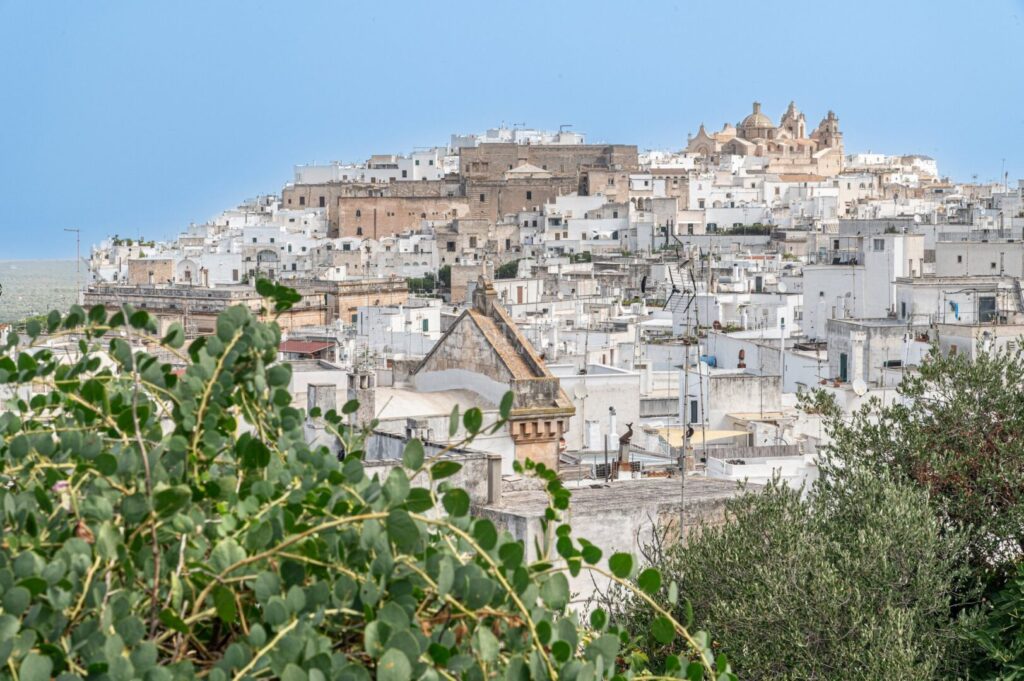
Morning in Ostuni, the White City
Seen from afar, Ostuni looks like a mirage: three hills covered in whitewashed houses standing out against the silvery green of the olive groves. To enter the old town, which locals call “la Terra”, start from Piazza della Libertà, with the column of Sant’Oronzo, and climb unhurriedly along Via Cattedrale, past alleys, flights of steps and small shops. You pass under the Arco Scoppa and reach the Co-Cathedral, built between 1435 and 1495, whose 24-spoke rose window is among the largest of its kind in Europe.
Along the same street, in the former convent of Santa Maria Maddalena dei Pazzi, the Museum of Pre-Classical Civilisations of the Southern Murgia holds the “Woman of Ostuni”, a young woman expecting a child who lived around 25,000 years ago: if you have time, it is a short stop well worth making, especially with children. Before heading down, you will find the best view of the town from the viewpoint on Corso Vittorio Emanuele II, right opposite the old town.
For lunch, Piazzetta Cattedrale is a stone’s throw from the cathedral; in the old town, the Taverna della Gelosia and Casa San Giacomo are also among the places we trust. If you happen to be there on a Saturday, spend the morning at the weekly market: more on that under day 4.
Early afternoon at the beach, in the Dune Costiere Park
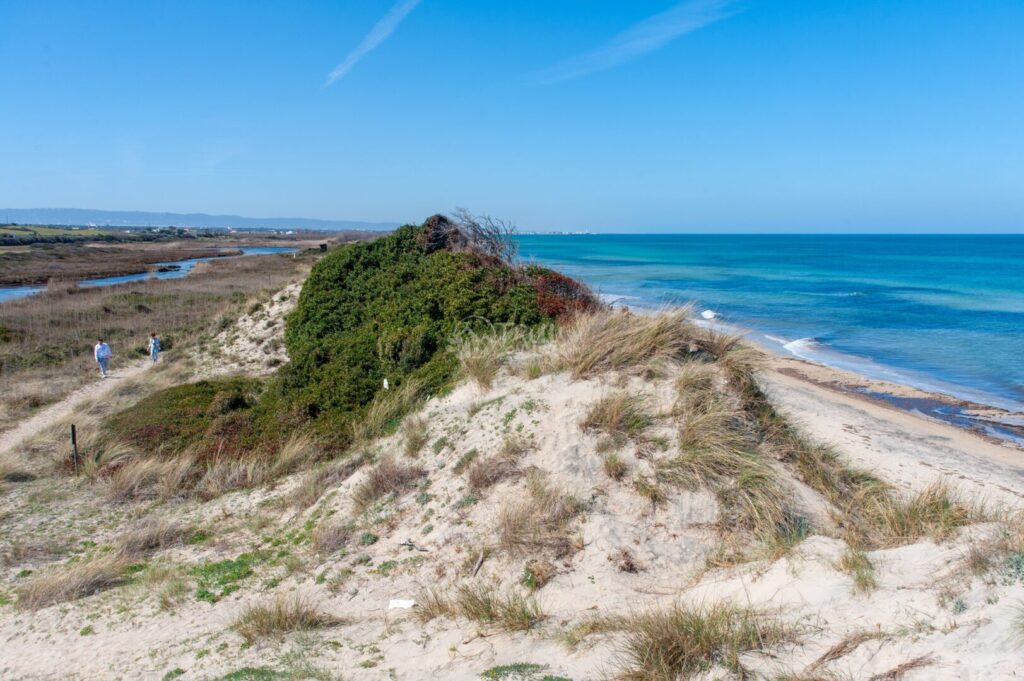
From the centre of Ostuni the coast is less than ten kilometres away. The Dune Costiere Regional Nature Park, from Torre Canne to Torre San Leonardo, is a protected stretch of coastline with tall sand dunes, junipers, Mediterranean scrub and small lagoons behind the beach. You can choose a lido with sunbeds and umbrellas, such as Lido Morelli or Lido Bosco Verde, or one of the free stretches of beach in between. The water is shallow and clear, ideal with children.
If the weather is not right for swimming, a couple of kilometres from the park is Masseria Brancati, a fortified farmhouse set in the plain of olive trees, where you can book a guided visit to the monumental olive grove, ending with an extra virgin olive oil tasting. It is one of the best ways to understand why, around here, the olive tree is almost one of the family.
Evening in Cisternino, between the viewpoint and the fornelli
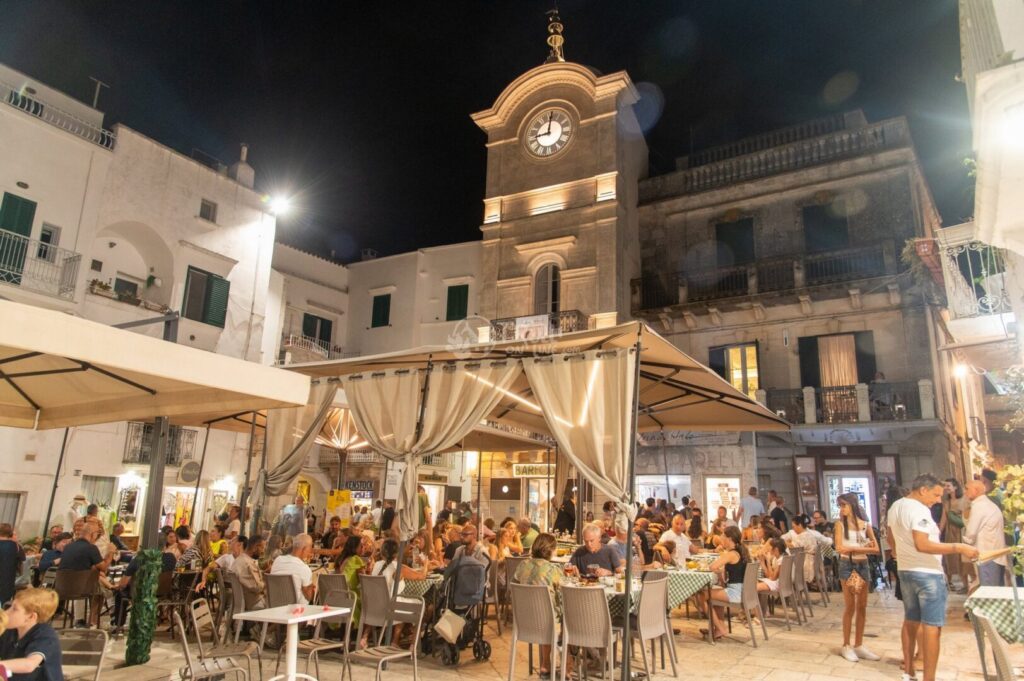
In the late afternoon, head back up to Cisternino, one of the Most Beautiful Villages of Italy. You enter through the Torre Grande, the Norman tower with the statue of Saint Nicholas, and lose yourself among the little courtyards, outside staircases and alleys of the historic quarters, which recall an eastern village. Sooner or later every street leads to Piazza Vittorio Emanuele, beneath the Clock Tower: the right place for an ice cream.
Before dinner, stop at the viewpoint in the Villa Comunale: coffee or ice cream in hand, the view sweeps 180 degrees over the valley, with trulli scattered among the olive trees and, in the distance, the outline of Martina Franca.
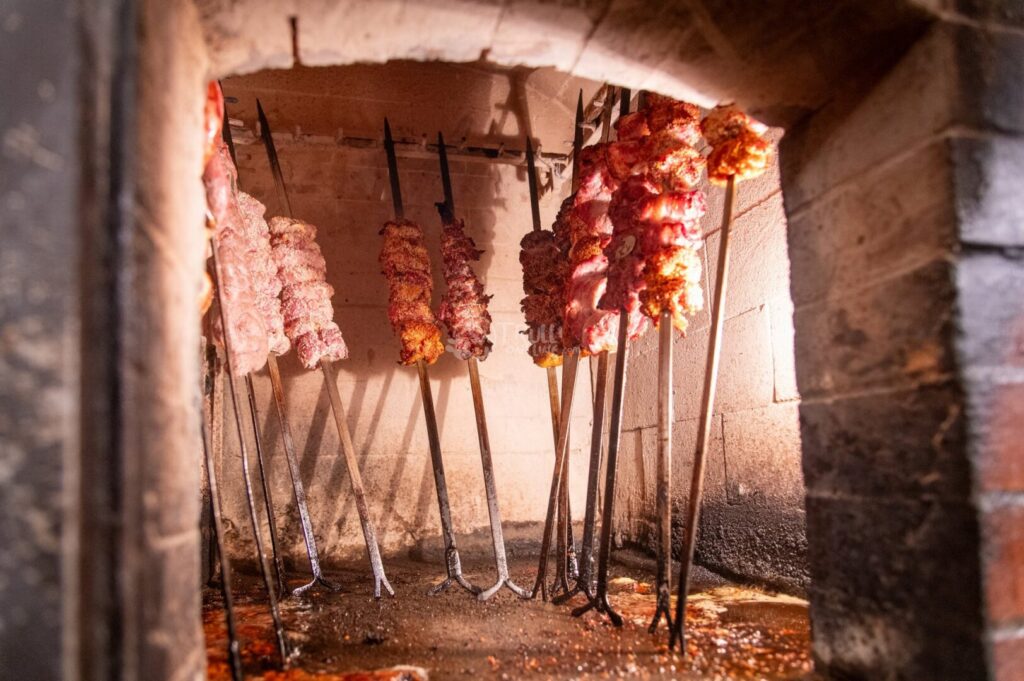
For dinner, Cisternino is the capital of the fornelli pronti: in the butcher’s shops in the centre you pick your meat at the counter (bombette, sausage, gnummeredd) and they roast it there and then, to be eaten at the tables in the alley with a glass of red. In summer it is best to arrive around 7.30 pm, before the crowds.
Practical tips. From Ostuni to the sea about 15 minutes, from the coast to Cisternino about half an hour. In Ostuni the most convenient parking is below the walls, on Via Giosuè Pinto; in Cisternino along Via San Quirico and Via Roma. The day’s route on Google Maps.
Day 2: Martina Franca and Locorotondo
Two towns ten minutes apart and two different ways of being beautiful: the aristocratic Baroque of Martina and the white circle of Locorotondo overlooking the vineyards.
Martina Franca, Baroque and capocollo
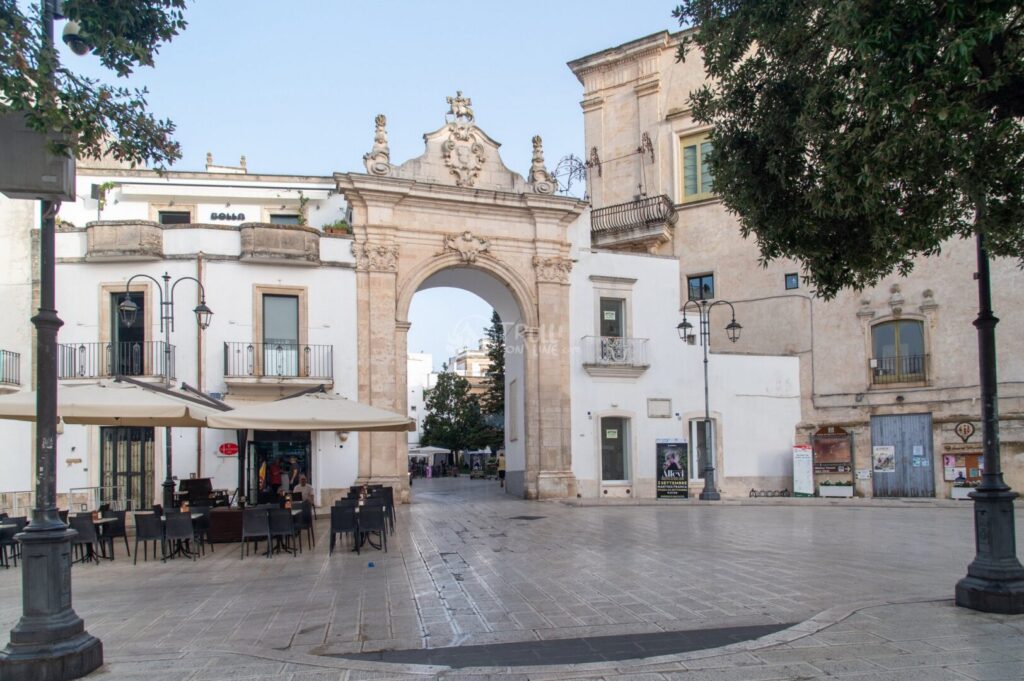
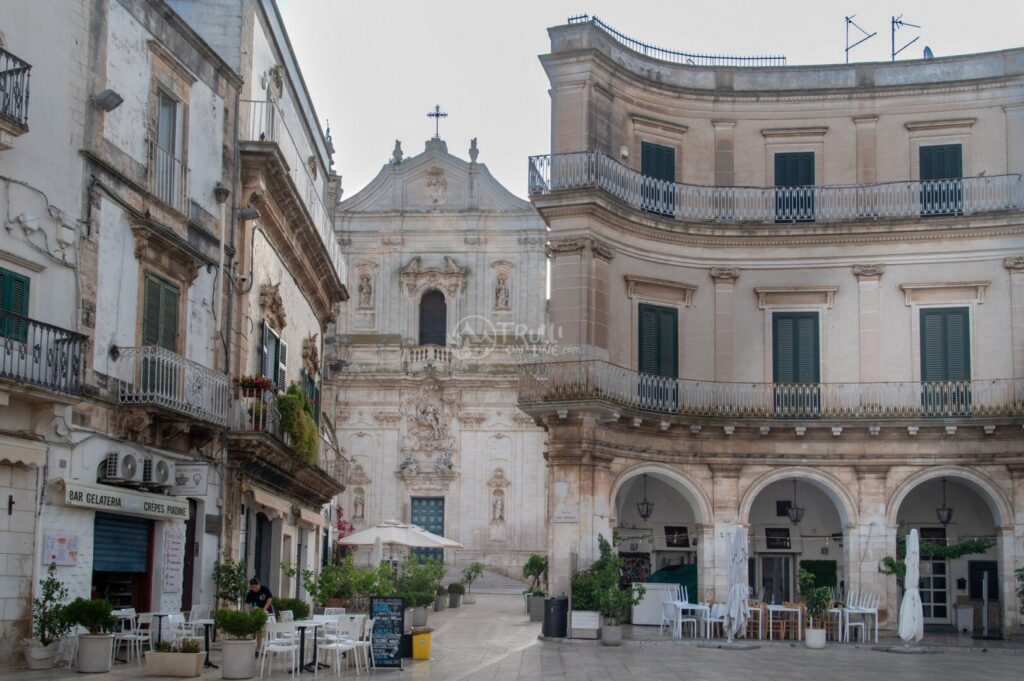
You enter the old town through the Porta di Santo Stefano, which locals also call the Arco di Sant’Antonio, and find yourself in Piazza Roma in front of the Palazzo Ducale, with its wrought-iron balconies and frescoed halls, now the town hall. A few steps further on is Piazza Plebiscito, dominated by the façade of the Basilica of San Martino, richly sculpted outside and adorned with marble and paintings inside. Next to it, Piazza Maria Immacolata, semicircular and lined with porticoes, is the town’s living room, where the people of Martina meet for coffee.
Martina’s Baroque is not in a single monument: it is in the doorways, the balconies and the churches you come across as you walk. Look up and you will find cherubs, shells and stone scrolls on every corner.
For lunch, Trattoria La Tana is one of our favourite places in the centre. Then stop at a pastry shop for a bocconotto, the filled shortcrust pastry typical of Martina, or for a granita in summer. Before you leave, buy a piece of capocollo di Martina Franca, cured and smoked with the bark of the Macedonian oak, a Slow Food Presidium. If your stay falls in July or August, check the programme of the Festival della Valle d’Itria: an opera in the courtyard of the Palazzo Ducale is a rare experience.
Locorotondo, the round town
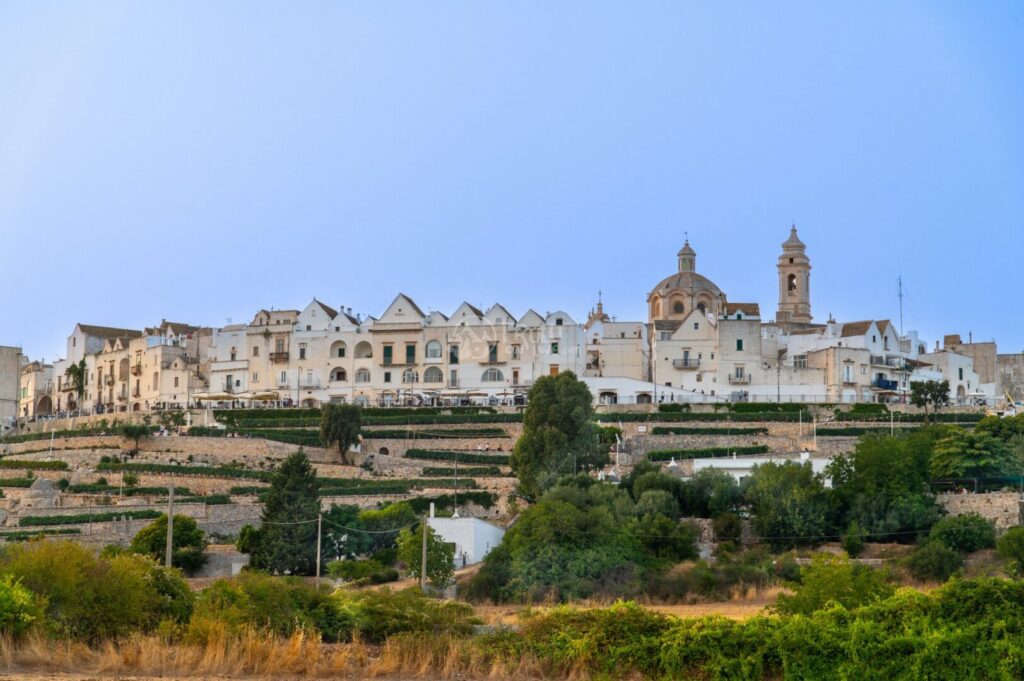
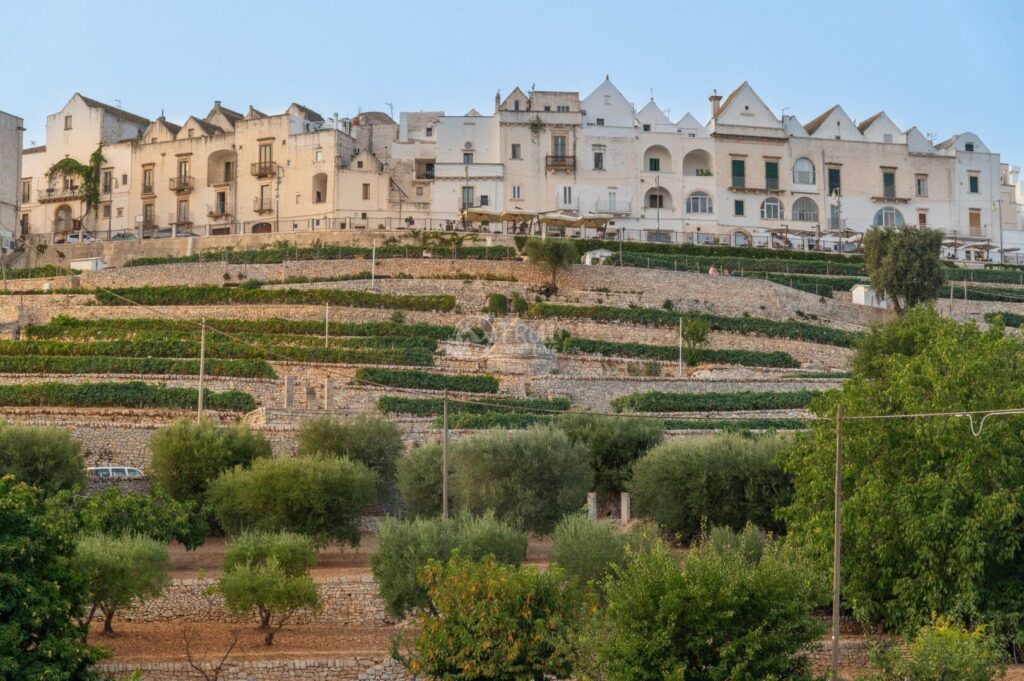
Locorotondo is ten minutes from Martina, and as you arrive from Martina you immediately understand the name: the old town draws an almost perfect circle on top of the hill. The old town is known for its cummerse, houses with steep double-pitched roofs covered in chiancarelle stone slabs, which make Locorotondo unlike any other town in the valley. Start from Porta Napoli, cross Piazza Vittorio Emanuele and let the concentric streets guide you, past flower-filled balconies and Latin inscriptions above the doorways.
The loveliest walk is along Via Nardelli, which locals call the “lungomare”, the seafront, even though there is no sea: a natural terrace over the valley, with vineyards and trulli all the way to the horizon. Below it, among the terraces, lies the urban vineyard of the Sìrose project, a “heroic” vineyard, as Italians call vines worked by hand on steep terraces, run by the Azienda Agricola Bufano Domenico: from May to the end of October you can book a wine tasting with the valley in front of you. In the other months it is best to call ahead, as it depends on the weather and in winter the vines are bare. Alternatively, in the countryside around Locorotondo, the I Pastini winery offers visits and tastings of the local whites, starting with Locorotondo DOC.
Stay until sunset: from the road that runs down towards Martina, the outline of the town glows orange, one of the most beautiful views in the Itria Valley. On Friday mornings there is the weekly market in Piazza Mitrano; in August the Locus Festival brings international music to the old town, and from 15 to 17 August the feast of San Rocco fills the sky with illuminations and fireworks.
Practical tips. In Martina Franca, park around the Villa Comunale or on Via Paisiello; in Locorotondo, in the underground car park in Piazza Aldo Moro, a short walk from the centre. The day’s route on Google Maps.
→ Read our Martina Franca guide
Day 3: Alberobello and Monopoli
From the UNESCO-listed trulli to the fishermen’s harbour: the day that brings together the two symbols of Puglia, stone and sea.
Alberobello, the capital of the trulli
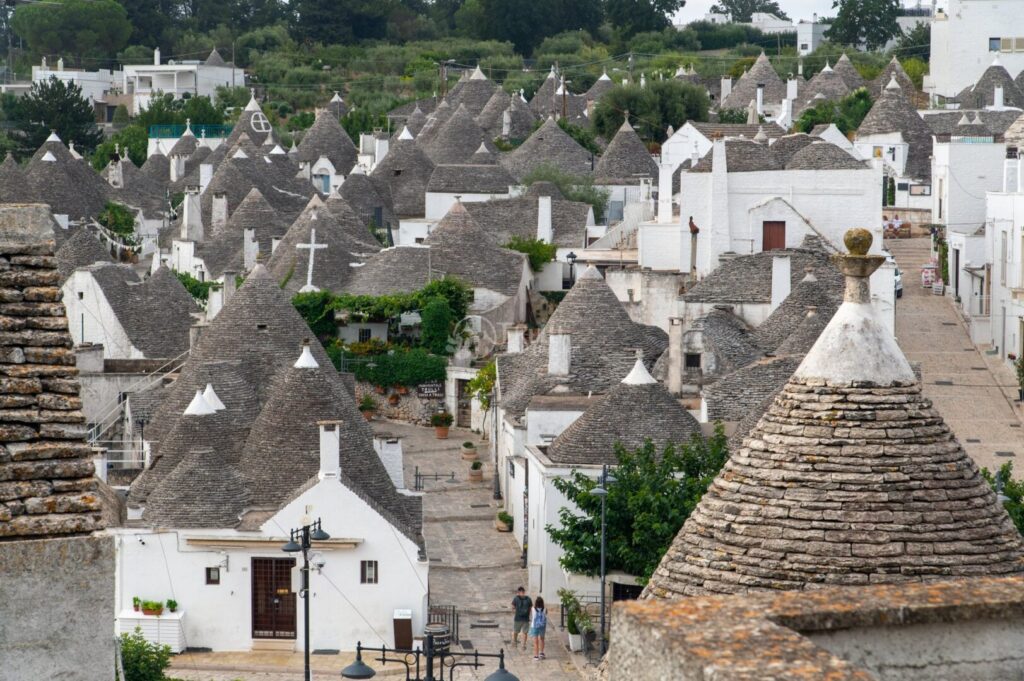
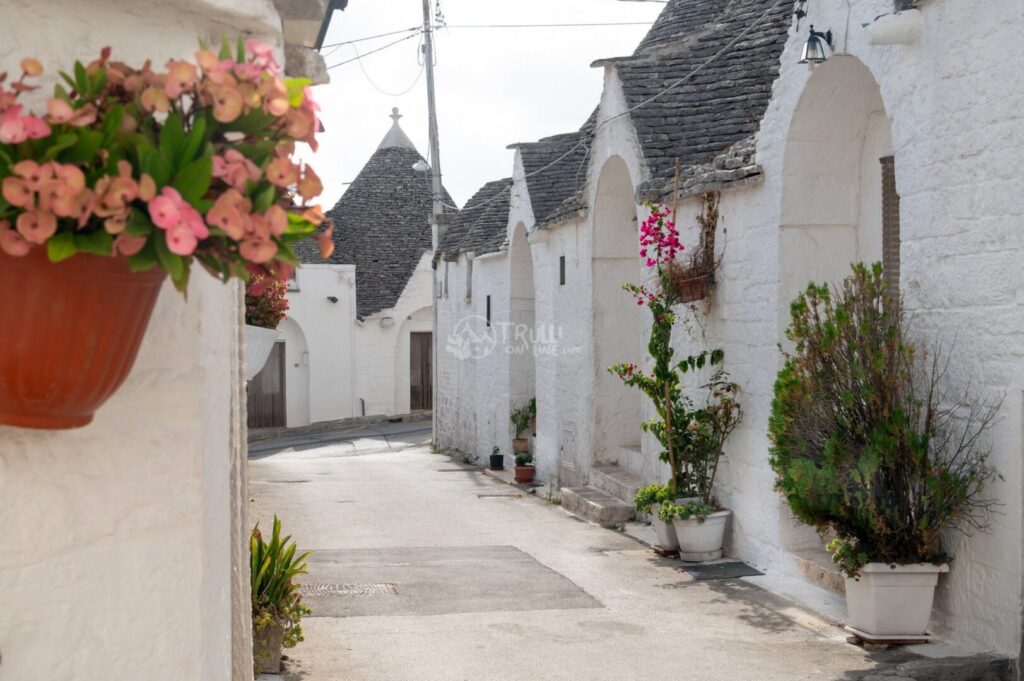
No trip to Puglia is complete without Alberobello: more than a thousand trulli packed tightly together, recognised as a UNESCO World Heritage Site in 1996. The secret is timing. From May to September, arrive before ten or in the late afternoon, when most tour groups have left and the alleys can breathe again; in August, though, it is busy even early in the morning.
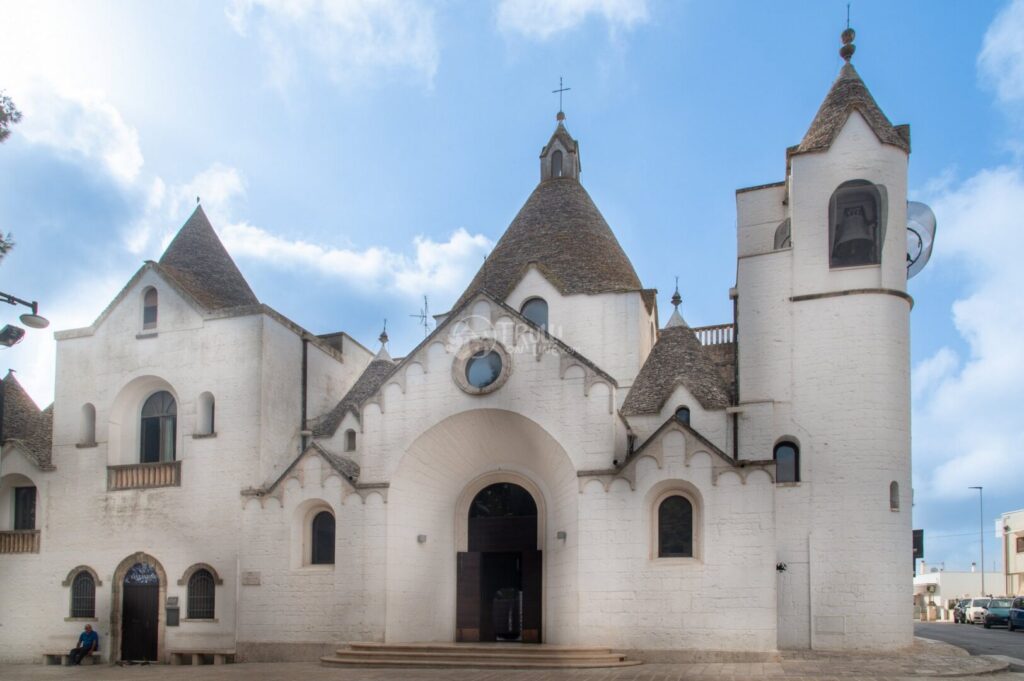
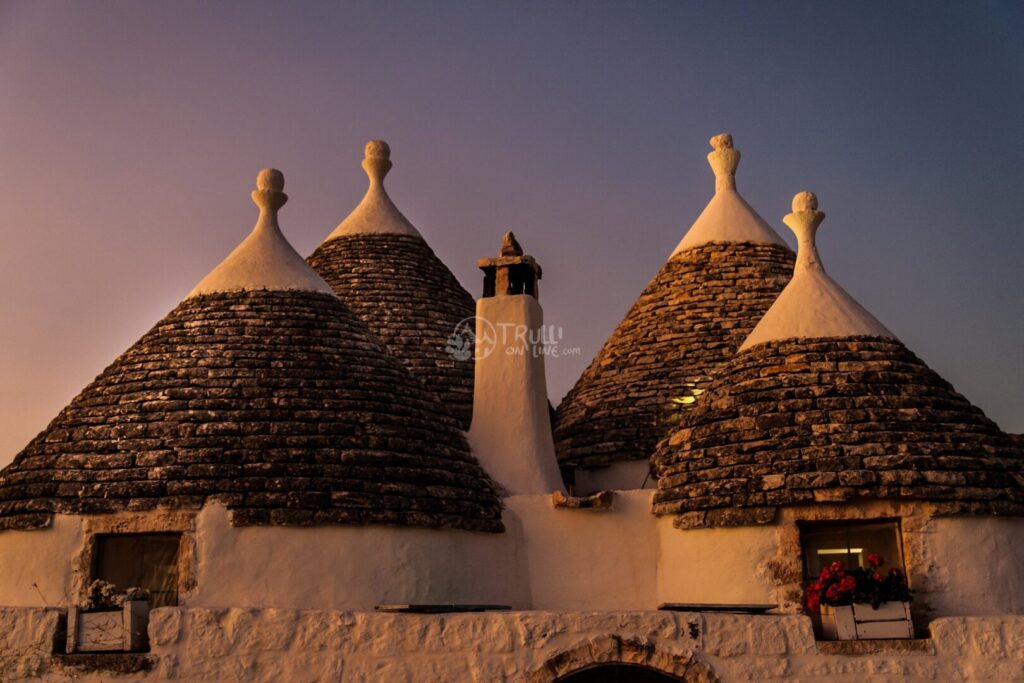
The Rione Monti is the best-known district, with shops along the steep little streets and, at the top, the Church of Sant’Antonio, itself built like a trullo. Crossing Piazza del Popolo, you climb instead to the Rione Aia Piccola, still lived in by local residents, where the atmosphere is quieter. In the shops you can ask how a trullo is built with dry stone, without mortar (you will find the story on our page about the origins of the trulli), and taste a local rosolio liqueur; the Trullo Sovrano, the largest in town and built on two floors, is now a small museum.
Off season. If you can, come back to Alberobello in autumn or winter. In the Aia Piccola smoke rises from the chimneys, a light mist drifts through the alleys and the yellow glow of the street lamps hangs in the damp air: the town becomes a fairy-tale landscape, a kind of spell that takes you back in time.
For wine lovers, Cantina Albea is right in the centre, on Via Due Macelli: by appointment it offers tours of the winery and its wine museum, ending with a tasting.
Monopoli, the town by the sea
From Alberobello you head down to the coast and in half an hour you reach Monopoli. It lies just outside the Itria Valley, but it is a stop you should not skip. The old town is a tangle of narrow white lanes that open onto the sea; at its heart stands the Cathedral of the Madonna della Madia, which keeps the Byzantine icon that, according to tradition, arrived on a raft, and not far away is the Castle of Charles V, overlooking the water.
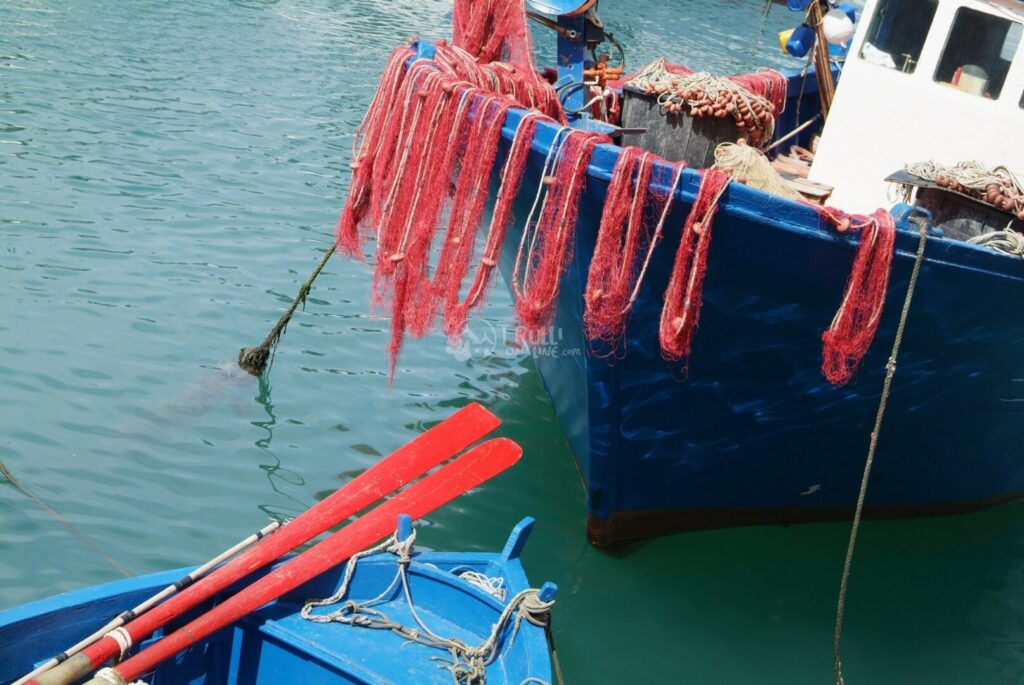
The streets lead to the Porto Vecchio, the old harbour with its blue fishing boats, and from there the walk along the sea walls begins. For lunch the old town is full of trattorias: among those we recommend are Osteria Perricci, Trattoria La Locanda dei Mercanti, the long-established Trattoria da Pierino l’Inglese and La Dolce Vita, in Largo Garibaldi, which is always busy. An honest piece of advice: in the central weeks of August avoid peak times, because with the crowds service suffers everywhere.
The afternoon is for swimming. Cala Porta Vecchia is the little beach below the walls, a few minutes’ walk from the centre; a little further south are the coves of Porto Bianco and Porto Rosso and, by car, the Capitolo coast, where free coves alternate with equipped lidos: for the coves, in high season, arrive early.
Practical tips. In Alberobello, park in Largo Martellotta or along Via Barsento. From Alberobello to Monopoli about 30 minutes; in Monopoli leave the car outside the old town, for example in the car park near Cala Porta Vecchia. The day’s route on Google Maps.
Where to stay? If you like this itinerary, at the bottom of the page you will find the most convenient houses to follow it from, or you can browse all our holiday homes straight away.
Day 4: a market, the sea or the Castellana Caves
The most flexible day of the week, built around the market of the day.
Morning at the weekly market
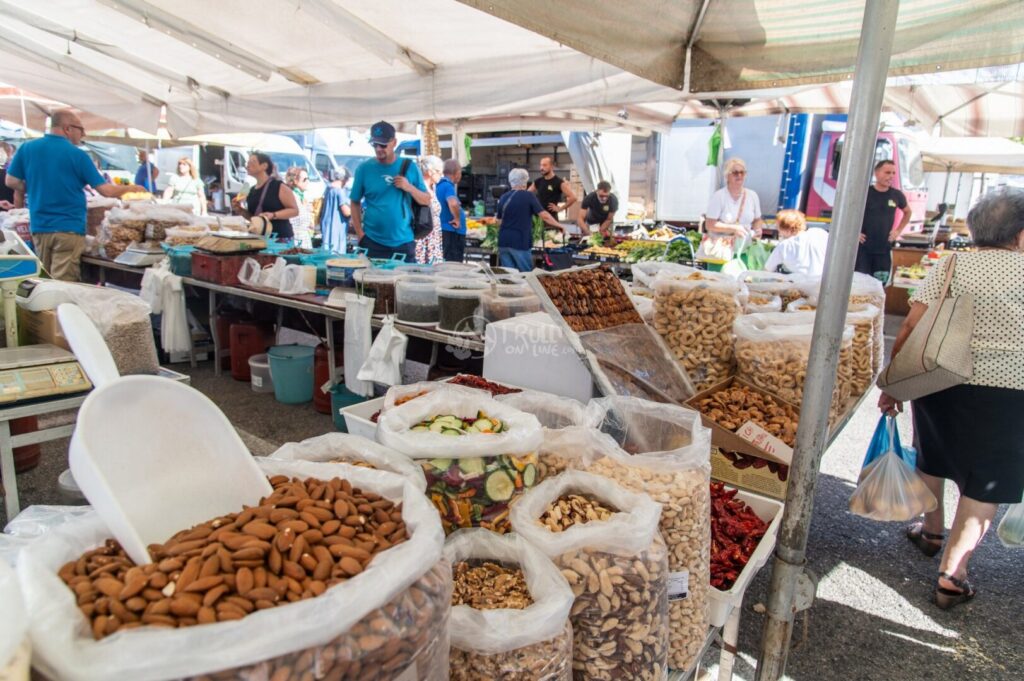
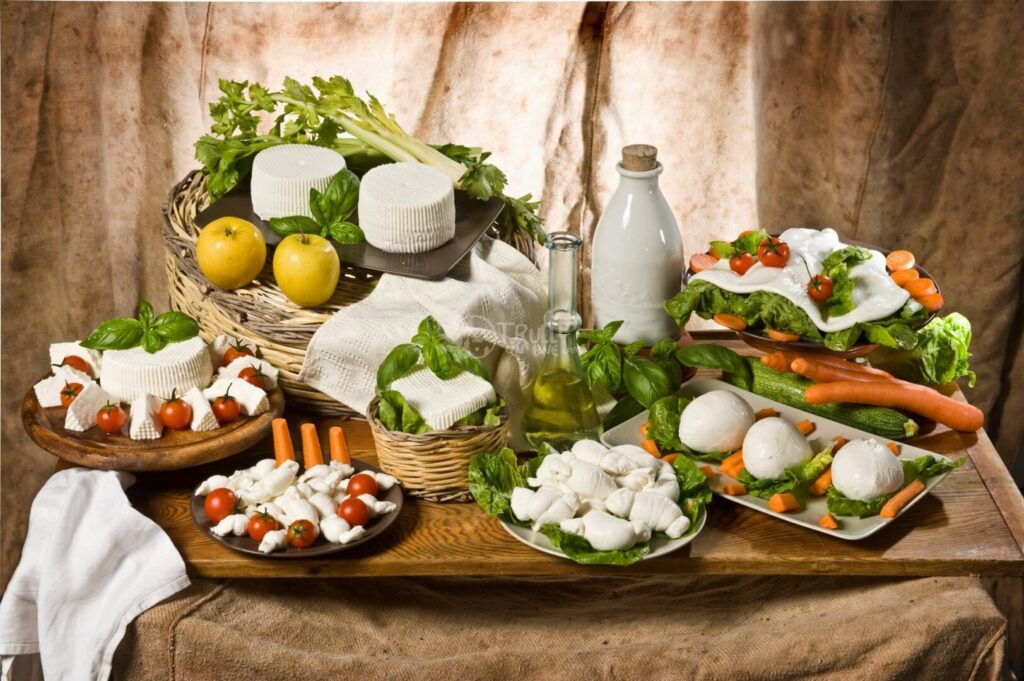
The weekly markets of the Itria Valley are an experience not to be missed. They have the colours, smells and chatter of the markets of the eastern Mediterranean, with areas divided by type: farmers’ fruit and vegetables, fresh cheeses, olives and taralli, dried fruit and nuts, plants, and then clothes, shoes, household goods and tools. These are not markets for tourists: they are where local people do their shopping, meet up and have a coffee at the bar.
| Day | Weekly market |
|---|---|
| Monday | Cisternino |
| Tuesday | Monopoli (market area around Piazza Falcone e Borsellino, between Via Togliatti, Via Croce and Via Trieste) |
| Wednesday | Martina Franca (from Via Recupero to Piazza d’Angiò) and Fasano |
| Thursday | Alberobello (Largo Martellotta and Via Barsento) |
| Friday | Locorotondo (Piazza Mitrano) |
| Saturday | Ostuni (Via degli Emigranti, near the church of the Madonna del Pozzo) |
The markets start at around eight and close at around one: arrive by nine, when the stalls are full and you can still find parking. Bring cash and a big bag. At the Saturday market in Ostuni, besides food, there is a real bazaar with a vintage and second-hand clothing section where you can find great bargains.
If you prefer your cheese straight from the people who make it, Masseria Conte, on the road from Cisternino down towards Speziale, makes dairy products with milk from its own cows and offers small visits and tastings for groups; at Selva di Fasano, Masseria Lisi sells bread, focaccia, cured meats and barbecue meat produced on the farm. You will find their contacts on our page of masseria tastings.
Sundays are for the antiques markets, a real treat for lovers of antique linen, furniture and household objects from the past:
| Sunday | Antiques market |
|---|---|
| Usually the first of the month (except August) | Cisternino |
| Second of the month (from June to September also the fourth) | Ostuni, Via degli Emigranti |
| Third of the month (except August) | Martina Franca, Foro Boario di Ortolini |
| Last of the month | Ceglie Messapica, Piazza Sant’Antonio |
Dates and locations can change from year to year, especially in summer: before you go, check the up-to-date events calendar, for example on Il Tacco di Bacco, or ask your hosts.
Afternoon among dunes and lagoons
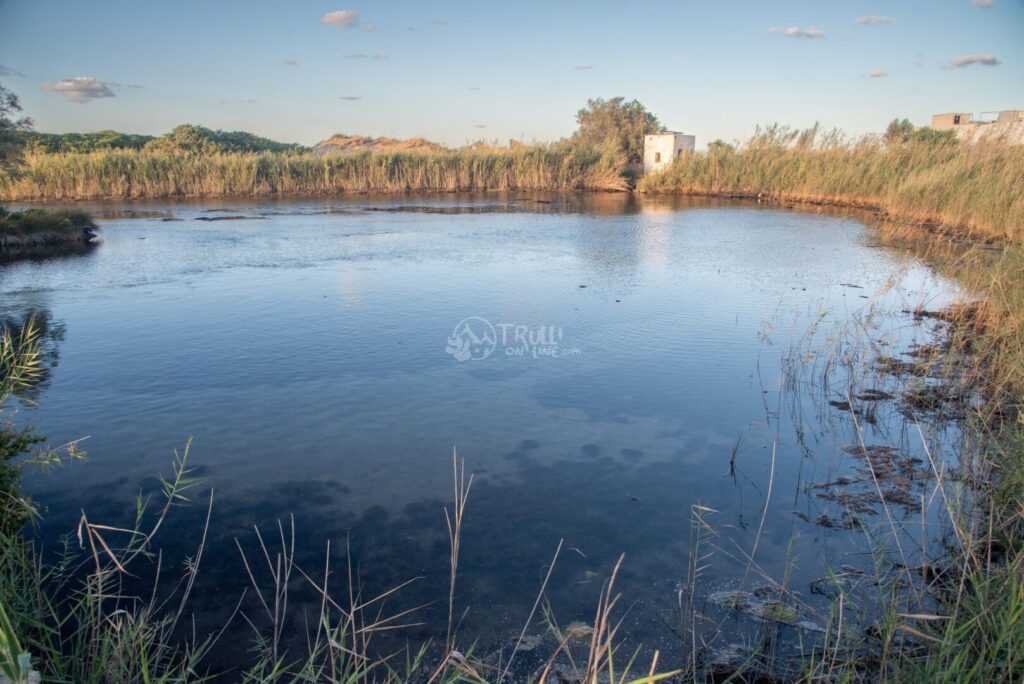
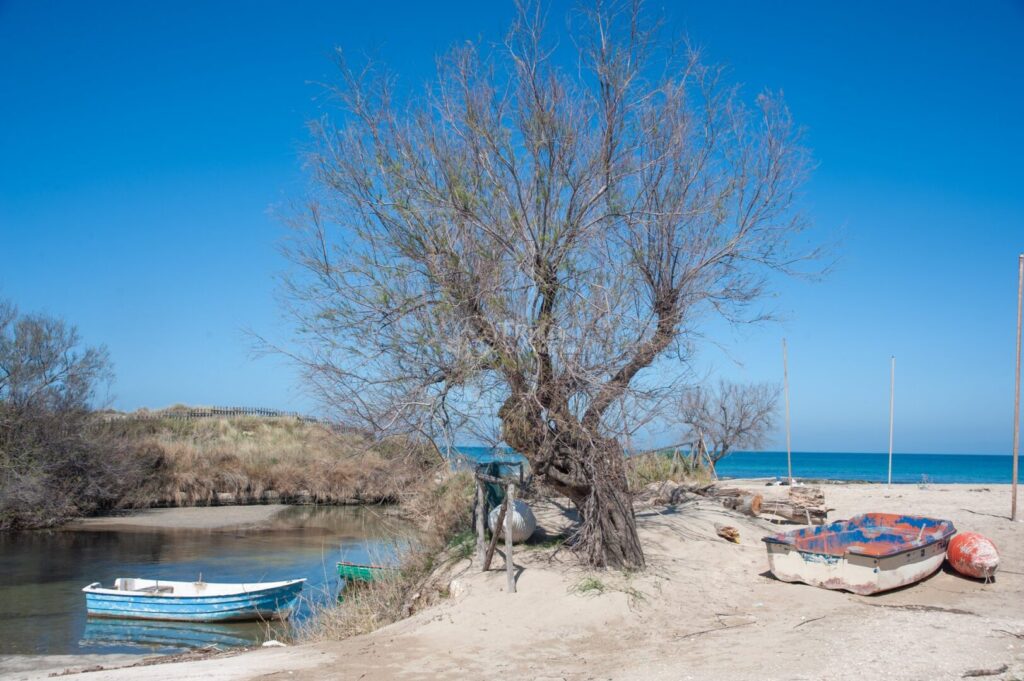
After lunch in one of the towns, the second half of the day is spent by the sea. The Dune Costiere Park and the Torre Guaceto Nature Reserve are two treasure chests of biodiversity: behind the beach lie lagoons and wetlands that are home to migratory birds, crossed by paths you can walk in autumn and winter too, when you have the coast to yourself.
Torre Guaceto, a nature reserve and marine protected area about half an hour from Ostuni towards Brindisi, cannot be crossed by car: you leave the car in the authorised paid car parks and in summer reach the beach on foot, by bike or by shuttle, when it is running. The water is among the clearest on the Adriatic coast; bring a mask and snorkel, but remember that swimming is forbidden in some areas of the reserve.
If it rains or out of season: the Castellana Caves
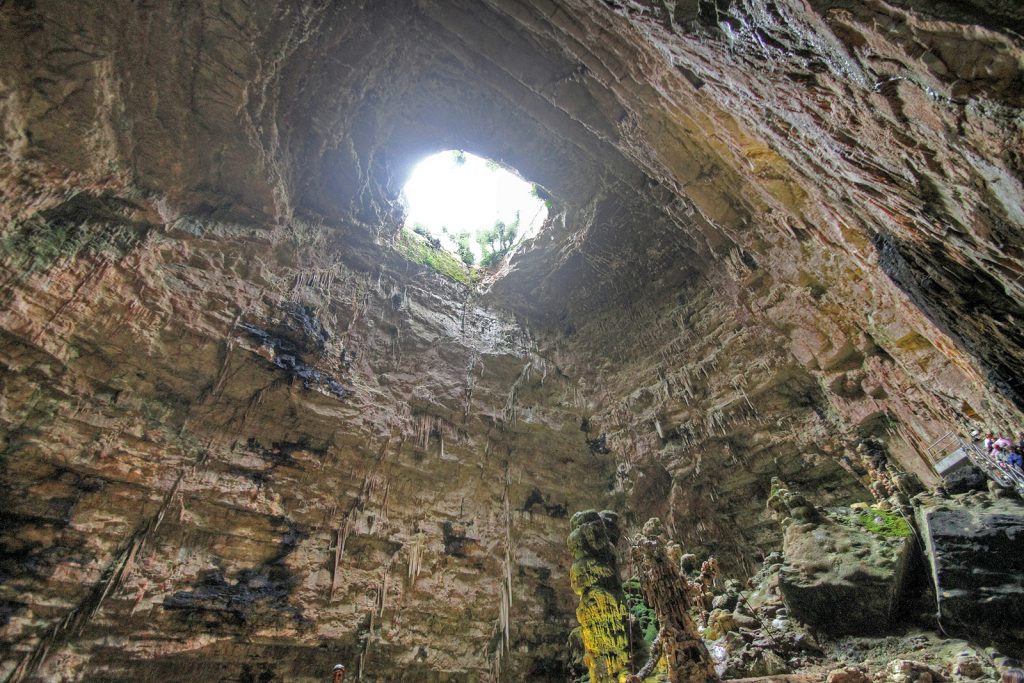
If you are here in winter, if it rains or if the sea is not calling you, about twenty minutes from Alberobello are the Castellana Caves, among the most spectacular in Italy. The visit starts from the Grave, the huge entrance chasm some 60 metres deep, and continues underground among stalactites, stalagmites and crystals as far as the Grotta Bianca, the White Cave, sparkling with calcite.
Visits are guided only, at set times, also in English. The short route is about one kilometre long and takes around fifty minutes; the full route, the only one that reaches the Grotta Bianca, is about three kilometres and takes about an hour and forty minutes. Underground the temperature stays at around 16-18 °C all year round, with very high humidity: bring a sweatshirt even in August and non-slip shoes. In high season it is best to book on the official website of the Caves.
Practical tips. Market and sea go well together when the market is close to the coast, as on Saturday in Ostuni or Wednesday in Fasano. From the Castellana Caves it is about 20 minutes by car to Alberobello, and about 25 to Monopoli and the sea.
→ The Castellana Caves and other destinations beyond the Itria Valley
Day 5: Egnazia, the Archeolido and Polignano a Mare
A day on the coast between Fasano and Polignano, from the Roman city overlooking the sea to the houses perched on the cliffs.
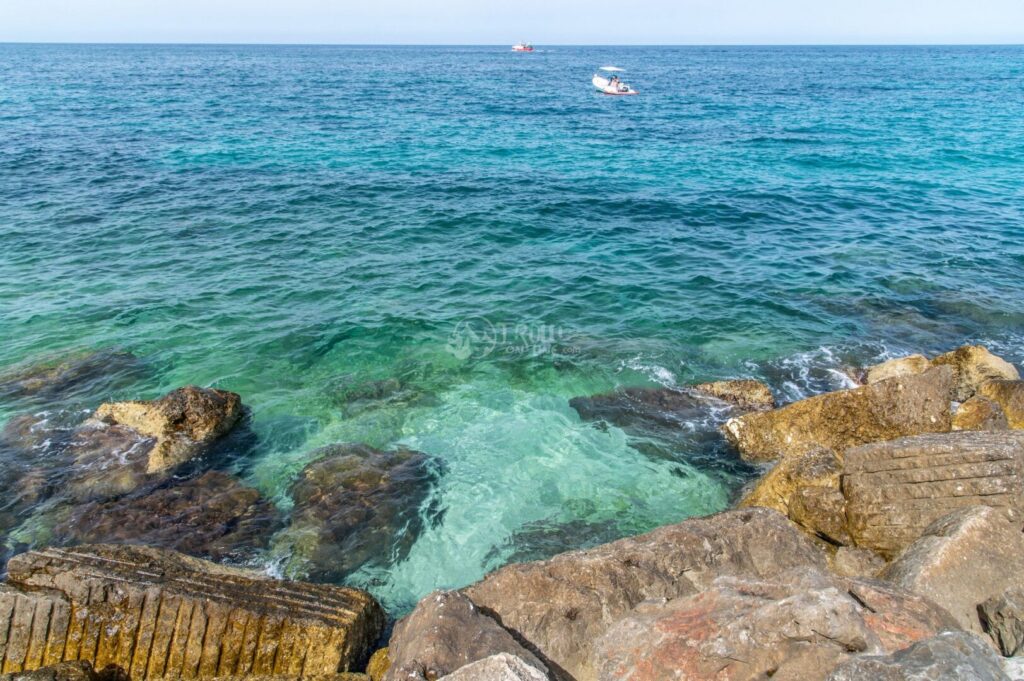
The Egnazia Archaeological Park
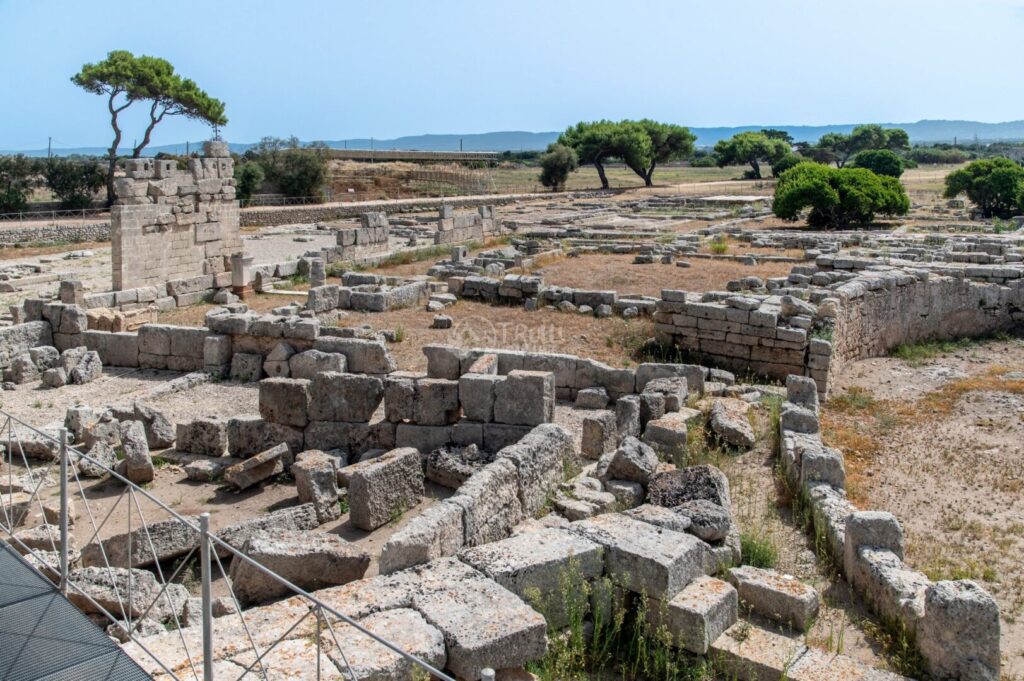
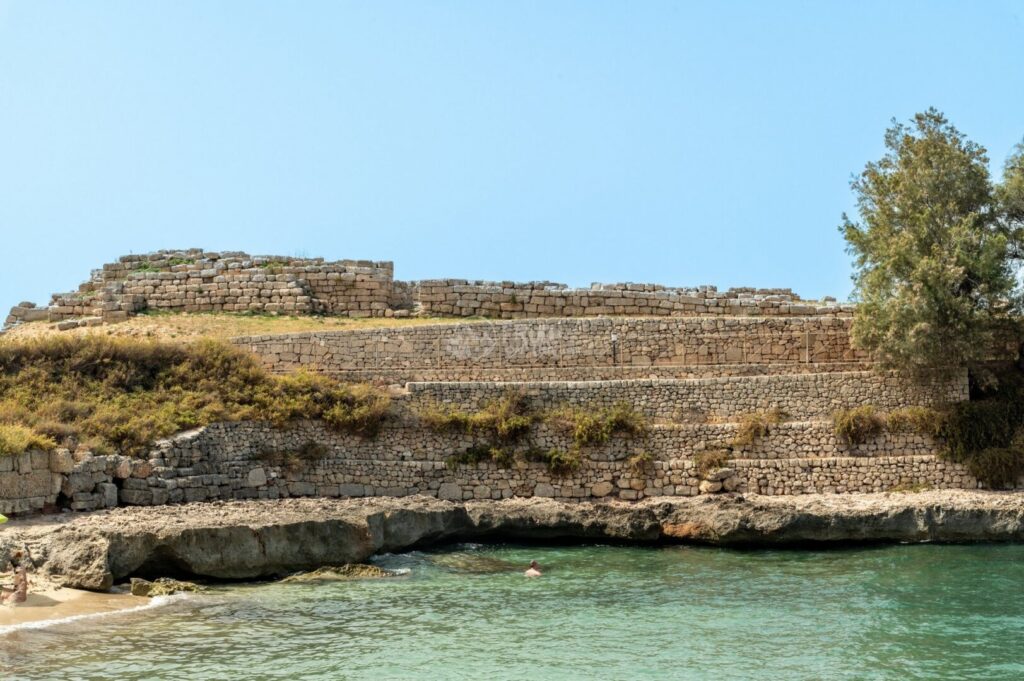
History lovers, and anyone who simply wants to understand the origins of this land inhabited by Messapians, Greeks and Romans, will find many answers at Egnazia. Mentioned by Pliny, Strabo and Horace, ancient Gnathia was an important port on the Via Traiana, the Roman road that led to Brindisi and from there to the East. In the park you walk among the Messapian walls, the forum, the cryptoporticus, the early Christian basilicas and the remains of houses with mosaics, all the way to the necropolis with its chamber tombs.
The “Giuseppe Andreassi” National Archaeological Museum, at the entrance, holds the pottery known as Gnathia ware, grave goods and a section devoted to the sea and underwater archaeology. Allow at least two hours for the park and museum, preferably in the morning, when it is cooler. Opening hours change with the seasons, so check them before you go; admission is free on the first Sunday of the month.
Snorkelling over the Roman harbour at the Archeolido
A few minutes from the park, on the beach next to the excavations, is the Archeolido. With a mask and snorkel you swim over the remains of the ancient port of Egnazia. It is a summer activity, from June to September, and so as not to miss the most interesting spots it is best to go with a guide, which you can book by contacting the Egnazia Museum; if you would rather go on your own, call Antonio, the owner of the Archeolido, on +39 347 993 2838. It is an unusual way of looking at archaeological heritage, from the sea, and children love it. Out of season the Archeolido, like the other lidos, is usually closed: the day still works with the park, the museum and a stroll around Polignano, which in winter you have all to yourself.
At the Archeolido you can also have lunch, with cold and hot dishes from the Apulian tradition, including vegetarian, vegan and gluten-free options. Alternatively, in Savelletri, a few minutes away, the Osteria del Porto is one of our go-to places for fish.
Sunset in Polignano a Mare
In about twenty minutes you reach Polignano a Mare, perched on its cliffs. You enter the old town through the Arco Marchesale and walk to the terraces overhanging the Adriatic, looking out on walls and steps for the hand-painted poems by the street artist Guido il Flâneur.
The most famous spot is Lama Monachile, also called Cala Porto: a small pebble beach enclosed between two rock walls, beneath the Bourbon bridge built on the route of the Via Traiana. On the seafront stands the statue of Domenico Modugno, the town’s most famous son, with his arms open towards the sea. For years Polignano has hosted a stage of the Red Bull Cliff Diving World Series, on dates that change every year: if you are there at the time, the whole town is celebrating.
Before you leave, stop in Piazza Garibaldi at Mario Campanella, “Il Super Mago del Gelo”, for an artisan gelato or the caffè speciale, the recipe born here that is a small ritual in Polignano.
Practical tips. From Fasano to Egnazia about 15 minutes, from Egnazia to Polignano about 20. In Polignano the old town is pedestrianised and in summer the car parks fill up early. If you want to see the coast from the sea, boat trips leave from the harbour of Torre Canne: Angelo Pesca Turismo takes you out on a fishing boat with an aperitif on board and a swimming stop, and Carani Nautica runs private excursions. You will find everything on our boat trips page. The day’s route on Google Maps.
→ Read our guide to Fasano, Egnazia and the coast
Day 6: the Acquedotto Pugliese cycle path and the ceramics of Grottaglie
The countryside at a slow pace in the morning, ceramic craftsmanship in the afternoon.
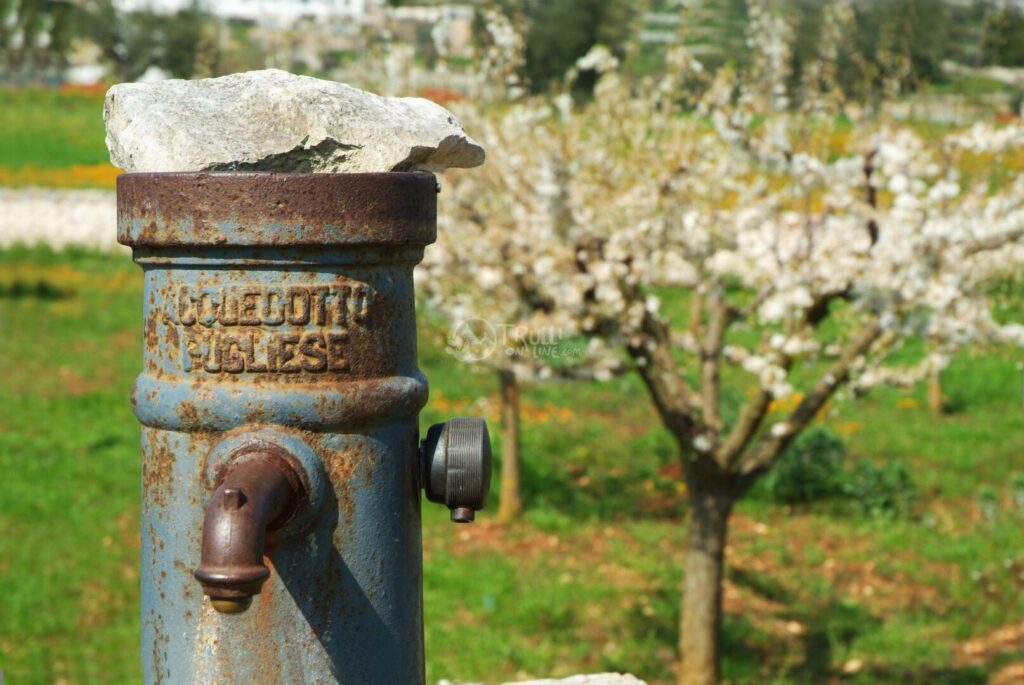
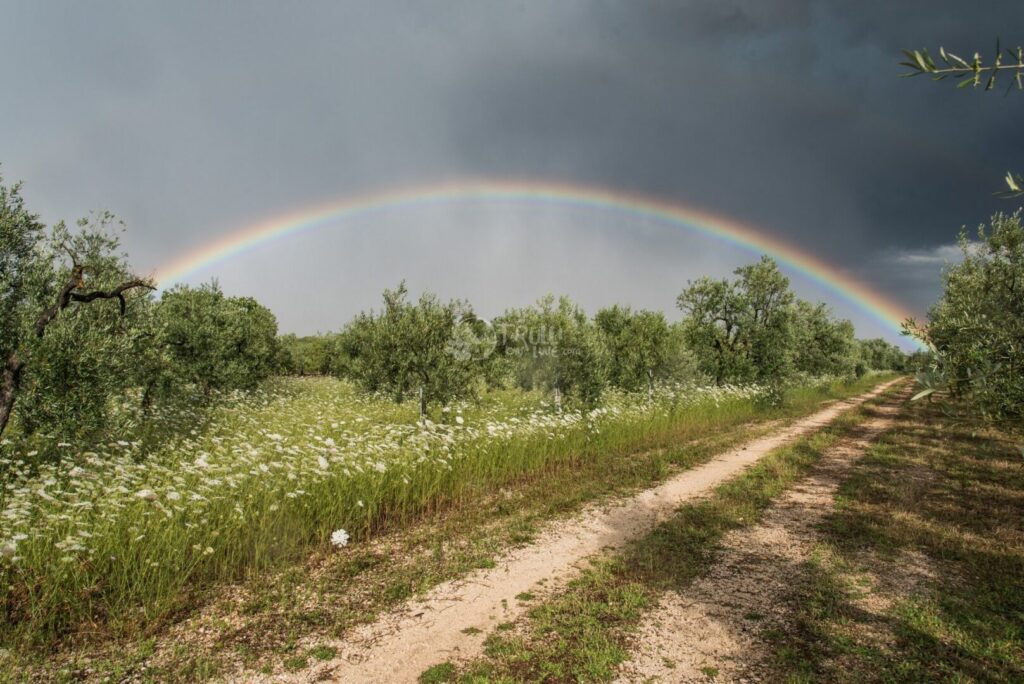
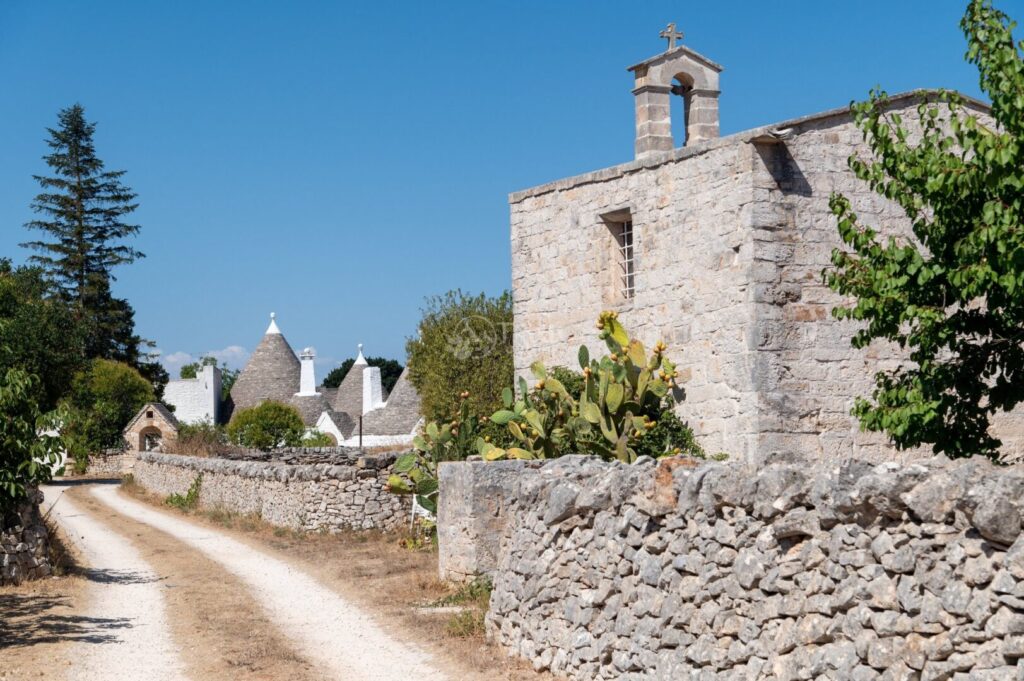
On foot or by bike along the Acquedotto cycle path
In spring, in autumn or on a mild winter’s day, a long walk or a bike ride along the Ciclovia dell’Acquedotto Pugliese shows you the Itria Valley the way the farmers see it. The valley section follows the service road of the aqueduct’s great canal for about fifteen kilometres, from Figazzano, a hamlet of Cisternino halfway to Locorotondo, to the Pineta Ulmo pine wood in Ceglie Messapica.
It is a dirt road, away from traffic, with gentle gradients and a few short climbs, running through small valleys dotted with trulli, olive groves, vineyards and oak woods, between dry-stone walls, country chapels and wayside shrines. The silence is broken only by birdsong and the odd tractor. GPS tracks can be downloaded from the official cycle path website: signposting is not everywhere, so it is better to have them on your phone.
Bring water and a hat, because there is little shade, and avoid the hottest hours from June to September. The cycle path is a linear route, so you come back the same way: on foot, just start from Figazzano and walk two or three kilometres before turning back; by bike you can go further, bearing in mind the ride back to where you left the car. We arrange bike hire for our guests: just ask us a few days in advance.
Lunch can be a picnic among the olive trees or, back in the car, in Ceglie Messapica, a few minutes from the Pineta Ulmo: it is the gastronomic capital of the valley, where every trattoria has its own recipe for orecchiette.
Afternoon in Grottaglie, the town of ceramics
From Ceglie, in about half an hour by car, you reach Grottaglie, in the province of Taranto, one of Italy’s ceramic capitals. In the Ceramics Quarter, at the foot of the Castello Episcopio, some fifty workshops and studios are carved directly into the rock, in the caves that gave the town its name.
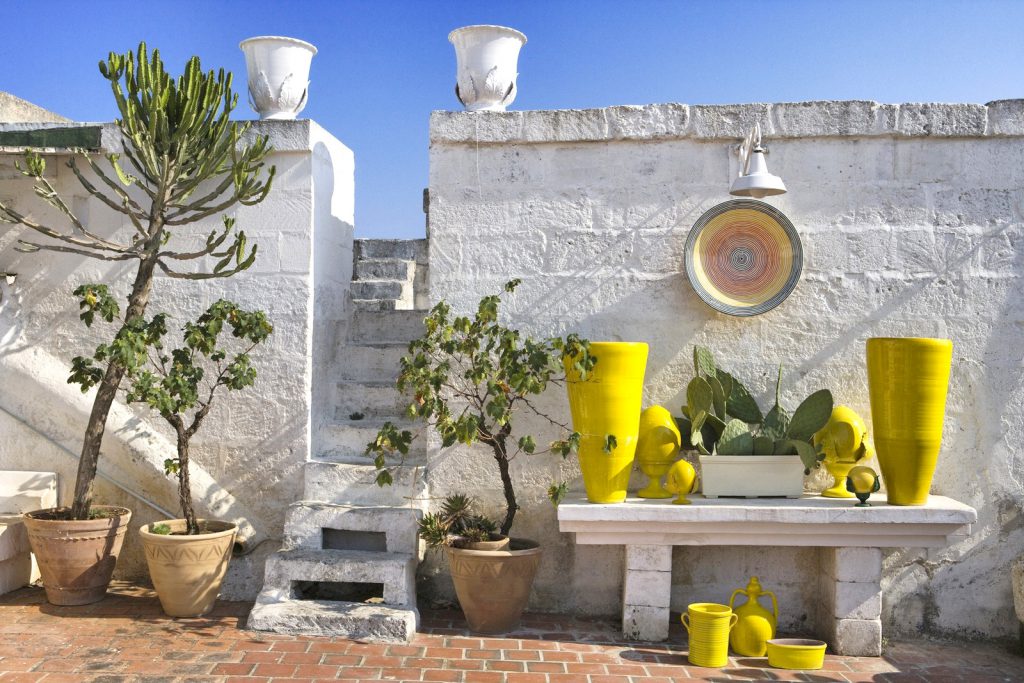
Here you can watch the potters at the wheel, step into the workshops and choose traditional pieces: plates, jugs and the pumi, the ceramic buds that people in Puglia place on balconies and walls as good-luck charms and symbols of prosperity. Inside the castle, the Ceramics Museum holds more than five hundred pieces, from ancient vases to majolica and nativity scenes. Check the opening hours before you go: out of season the museum opens only at certain times of day.
Practical tips. The easiest access to the cycle path is from Figazzano or from the Pineta Ulmo in Ceglie. From Ceglie to Grottaglie about 30 minutes; from Grottaglie to Martina Franca about 40. If you want to fit in Grottaglie as well, keep the cycle path to the morning and to no more than two or three hours. The driving route on Google Maps.
→ Read our Ceglie Messapica guide
Day 7: a lazy day at the trullo, or a trip to Bari or Lecce
After whole days spent exploring, the last day is made for slowing down.
A day at the trullo
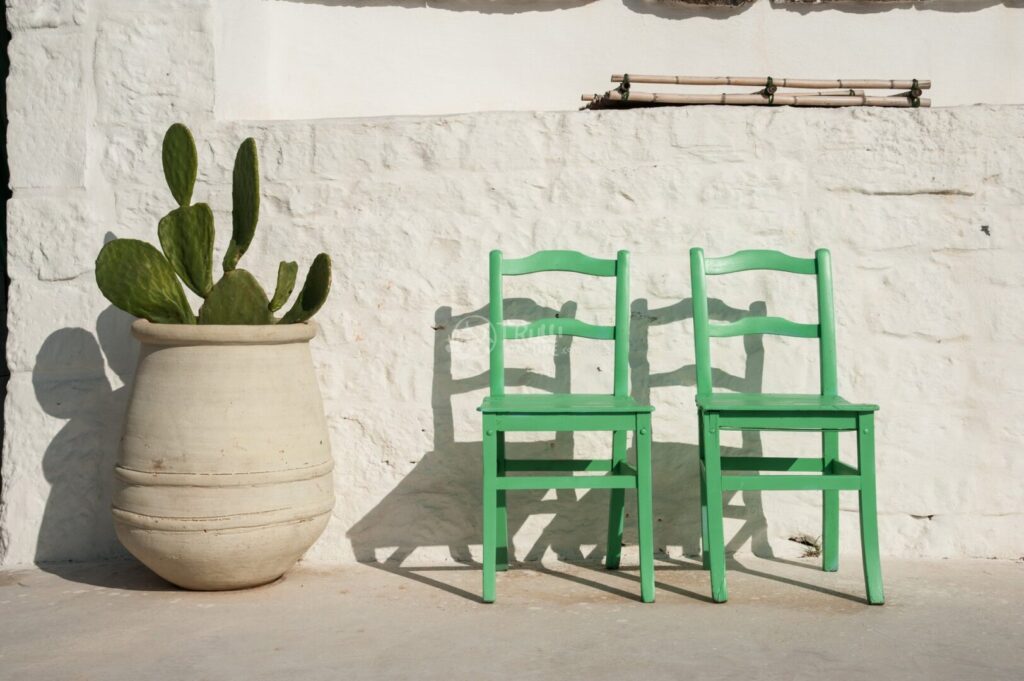
A dip in the pool, a long breakfast under the pergola, a barbecue with friends and family in the shade of the olive trees: this too is the joy of staying in a trullo, enjoying the house and garden with no timetable and nowhere to be. It is also the right day to buy what you want to take home, olive oil, wine, taralli, capocollo, straight from the people who produce it.
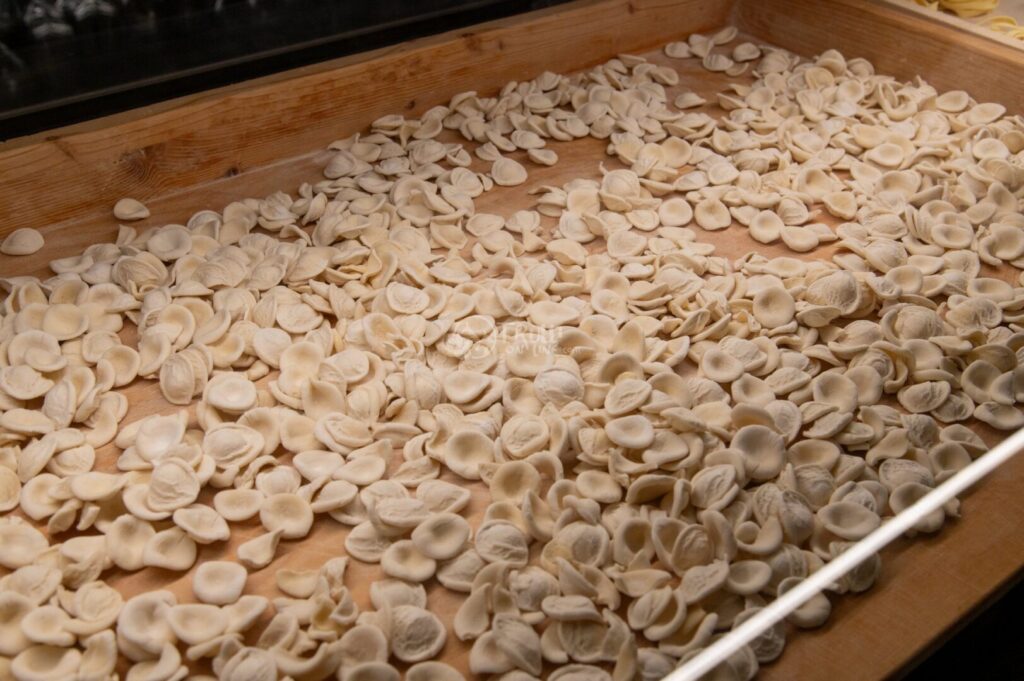
If you want to end the week with a special dinner without going anywhere, we can arrange a private chef to cook in your holiday home with local seasonal produce. To learn how to make orecchiette by hand, there are the cooking classes of Dire Fare Gustare, in an old masseria, or Puglia Kitchen, which brings the teacher and the ingredients straight to your trullo; Humus Nature, meanwhile, organises extra virgin olive oil tastings at your house. Contacts and details are on our services and experiences page.
Bari, the city of Saint Nicholas
For those not yet tired of sightseeing and exploring, Bari is about an hour’s drive away. Bari Vecchia, the old town, is a maze of alleys between the Basilica of San Nicola, which holds the saint’s relics and draws pilgrims from all over the world, the Cathedral of San Sabino and the Norman-Swabian Castle. In the street of the Arco Basso, the women of the neighbourhood make orecchiette by hand in front of their doors. End the day with a walk along the seafront and a fried panzerotto.

Lecce, the capital of the Baroque
Lecce is about an hour from Ostuni and an hour and a half from the Martina Franca area: allow a full day, including the journey there and back. It is the capital of the Apulian Baroque, with façades embroidered in Lecce stone, a soft, golden limestone. Not to be missed: the Basilica of Santa Croce, Piazza del Duomo and Piazza Sant’Oronzo, with the Roman amphitheatre in the middle of the city. For an afternoon snack, a warm pasticciotto; in the shops of the centre, papier-mâché craftsmanship.

Practical tips. The old towns of Bari and Lecce are limited-traffic zones. If you are staying near Ostuni or Fasano, you can leave the car at the station (Ostuni, Fasano or Monopoli, on the Bari-Lecce line) and take the regional train: from Bari and Lecce stations the old town is about a fifteen-minute walk, with no worries about traffic or parking.
→ Bari, Lecce and other places to discover in Puglia
Where to stay for this itinerary
Every stop on this itinerary can be reached as a day trip from any of our houses. To choose your base, think about what you will be doing most often.
If you want to be in the heart of the valley, the countryside between Cisternino and Martina Franca is the most convenient location: Trullo Meraviglie and Trullo di Marella are a few hundred metres apart, where the provinces of Bari, Brindisi and Taranto meet, and Borgo Specchiaruzzo sleeps up to fourteen people four kilometres from Cisternino.
If the sea is your priority, choose the Ostuni or Fasano area: Trullo Candido is two kilometres from the coast, Trullo il Nespolo is halfway between the White City and the sea, and Vigne di Salamina has a rare sea view from the hills of Fasano. For large groups, Trullo La Zisa sleeps up to twenty-two people seven kilometres from the beach.
If a pool is a must, start from our selection of trulli with a pool; to see where each house is in relation to the towns and the sea, have a look at the map of our trulli.
Frequently asked questions about the Itria Valley itinerary
How many days do you need to visit the Itria Valley?
Three or four days are enough to see the main towns: Alberobello, Locorotondo, Martina Franca, Cisternino and Ostuni. A week lets you add the sea, a market, Egnazia, Polignano a Mare and a day of rest without rushing. Distances are short: the towns are usually 10-30 minutes apart by car.
Where is the best place to stay to visit the Itria Valley?
In the countryside between Cisternino, Martina Franca, Locorotondo and Ostuni: from here the main towns are 10-40 minutes away, depending on where the house is, and the sea 20-40 minutes. A trullo with a pool in the countryside lets you alternate excursions with days of rest.
Do you need a car for this itinerary?
Yes. Trains and buses connect the main towns but with limited timetables, and masserie, beaches and the cycle path can only be reached by road. The train is handy, however, for the trips to Bari and Lecce.
On which days are the weekly markets held in the Itria Valley?
Monday in Cisternino, Tuesday in Monopoli, Wednesday in Martina Franca and Fasano, Thursday in Alberobello, Friday in Locorotondo and Saturday in Ostuni, roughly from 8 am to 1 pm.
What is the best time for a week in the Itria Valley?
From late May to late September to combine towns and sea; May, June, September and October for smaller crowds and milder temperatures. In winter the towns are very peaceful and Alberobello in the fog is magical, but several activities on the coast are closed.
Is the itinerary suitable for children?
Yes. The beaches of the Dune Costiere Park have shallow water, the markets and the fornelli of Cisternino appeal to everyone, and the Archeolido and the Castellana Caves are a small adventure. With young children, the Zoosafari in Fasano can replace one of the stops.
Do the Castellana Caves need to be booked?
Visits are guided only and leave at set times; in high season and at weekends it is best to book online. The full route, as far as the Grotta Bianca, takes about an hour and forty minutes, the short one about fifty minutes.
Information checked in November 2026. Opening hours, market dates and museum openings may change: if in doubt, ask us.
→ Discover all the towns of the Itria Valley


